
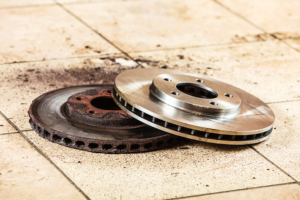
There are a number of signs that can predict when brake repair will be needed. The most common ones are the easiest to detect. A steering wheel that wiggles could be a sign of brake problems. If the steering wheel jiggles back and forth every time you come to a stop, then this is a sign of worn out brake rotors. Brake rotors do not need to be changed as often as brake pads, but should still be replaced every few years. It is suggested to have your brake rotors changed every three times your brake pads are replaced. When it comes to brake pads, another observable sign of brake damage is high pitched squeaking. When your vehicle squeals anytime you apply pressure to the brake pedal, this could be an indication of bad brake pads. The squeaking sound comes from a piece on the actual brake pad that gets exposed once the pad is worn down enough. When this indicator is exposed, it is time to replace the pads.
Most brake repairs involve work related to the brake’s main parts, ranging from the master cylinder and brake lines to the brake pads, rotors, and calipers. The master cylinder is normally reliable and experiences few malfunctions but they can develop internal leaks. When left unattended, the leak can cause the brake pedal to work intermittently or fail altogether. A warning light on your dashboard will alert you if your master cylinder has failed. Healthy brake fluid is clear or slightly yellow in color. If you notice the fluid has turned dark or is dirty, ask your mechanic to change the brake fluid. Brake lines are composed of steel tubes and rubber hoses, and they provide a way for brake fluid to travel from the master cylinder to the wheels.
An emergency or parking brake is used in the event of a failure of the regular brakes. However, the parking brake is most commonly used when parking on a steep hill to prevent the car from rolling. When the emergency brakes fail, the probable cause is that the rubber hose that covers the brake cable has deteriorated. When this happens, the metal cable rusts rapidly and eventually breaks. If you notice that your emergency brake cable is broken, replace the brake immediately. Also be aware of anything out of the norm with your vehicle. If you notice something, make sure to schedule an appointment so we can look at it as soon as possible for you.