
Your vehicle depends on dozens of moving components to provide a smooth, controlled ride, and wheel bearings are among the parts most drivers rarely think about until something goes wrong. Wheel bearings allow your wheels to rotate smoothly while supporting the weight and forces placed on them as you drive. When they begin wearing out, however, the symptoms can quickly become noticeable.
Recognizing bad wheel bearing symptoms early is important because a failing bearing can affect steering, handling, tire wear, and overall vehicle safety. One of the most common signs is a humming, growling, or rumbling noise that changes as vehicle speed increases. Other symptoms can include vibration, looseness in the steering, uneven tire wear, or problems associated with the wheel speed sensor.
Unfortunately, some bad wheel bearing symptoms are easy to confuse with tire, suspension, or drivetrain problems. Understanding what to watch and listen for can help you know when it is time to have your vehicle professionally inspected.
What Does a Wheel Bearing Do?
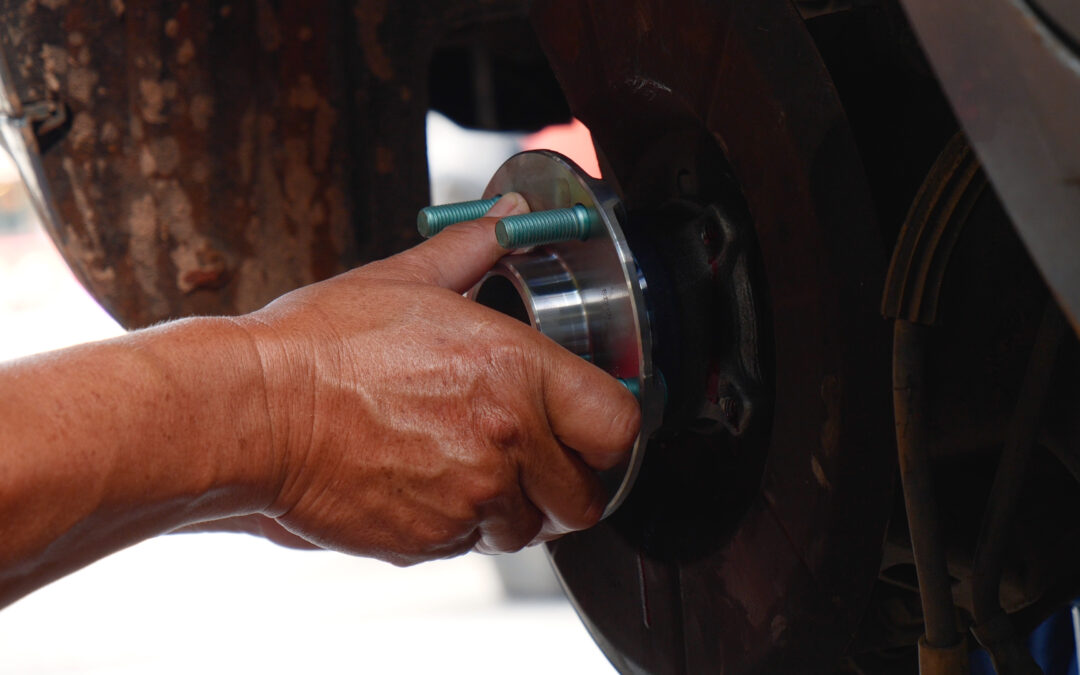
A wheel bearing allows the wheel to rotate with minimal friction while supporting the load placed on that corner of the vehicle. Bearings are located within or alongside the wheel hub assembly, depending on the vehicle’s design.
Every time you drive, wheel bearings deal with considerable forces. They support vehicle weight while handling cornering, braking, acceleration, bumps, potholes, and thousands of wheel rotations.
Many modern vehicles use sealed wheel bearing or hub assemblies. These aren’t routine maintenance items in the same way as engine oil or brake pads, but they can eventually wear out.
Normal wear is one cause of bearing failure, but hitting potholes or curbs can shorten bearing life. Water, road salt, sand, and other contaminants entering through damaged seals can also contribute to premature wear.
Bad Wheel Bearing Symptoms Often Begin With Noise
One of the most recognizable bad wheel bearing symptoms is an unusual noise coming from around the wheels.
Drivers often describe the sound as:
- Humming
- Growling
- Rumbling
- Grinding
- Roaring
Unlike many engine noises, wheel bearing noise typically changes with vehicle speed. As the wheels rotate faster, the noise may become louder or change in pitch.
At first, the sound can be subtle enough to mistake for ordinary road or tire noise. As bearing wear progresses, the sound may become much more noticeable.
If your vehicle suddenly seems louder while driving and the noise increases with road speed, having it inspected can help determine whether a wheel bearing, tire, or another rotating component is responsible.
Humming or Growling That Changes When Turning
Another characteristic associated with bad wheel bearing symptoms is a noise that changes while turning.
Cornering shifts the vehicle’s weight and changes the load placed on individual wheel bearings. A worn bearing may become louder or quieter as that load changes. Manufacturers even use changes in bearing noise during steering as one diagnostic clue, although locating the exact failed bearing can still require additional testing.
You might notice the sound while:
- Following a curve
- Changing lanes
- Turning through an intersection
- Driving around a highway ramp
A noise that changes when turning doesn’t automatically mean the wheel bearing is bad. Tire wear, CV joints, suspension components, and other problems can create similar symptoms.
That is why the sound should be treated as a reason for an inspection rather than a definite diagnosis.
Steering Wheel Vibration
Vibration is another possible warning sign.
A worn wheel bearing can develop looseness or irregular movement as the wheel rotates. Depending on the location and severity of the problem, that movement may be felt through the steering wheel or elsewhere in the vehicle. Steering wheel vibration is among the symptoms associated with worn wheel bearings, but tire and suspension problems can create similar sensations.
If you experience vibration, pay attention to when it occurs.
Does it increase with speed? Does it happen while braking? Does it become more noticeable during turns?
Those details can help a technician distinguish bad wheel bearing symptoms from an unbalanced tire, damaged wheel, brake problem, CV axle issue, or worn suspension component.
Loose or Unresponsive Steering
As wheel bearing wear becomes more severe, excessive play can develop at the wheel.
This can affect how connected the vehicle feels to the road. Steering may begin to feel less precise, and you might notice wandering or looseness.
Any noticeable change in steering should be taken seriously. Loose steering can result from several different problems, including worn steering and suspension components, so the vehicle should be inspected rather than assuming the wheel bearing is responsible.
The important thing is recognizing that changes in steering behavior aren’t something to ignore.
Uneven Tire Wear
Tires can sometimes provide clues about problems elsewhere in the vehicle.
If a wheel bearing develops excessive movement, the wheel may no longer remain as stable as intended. Over time, this can contribute to irregular tire wear.
However, uneven tire wear has many potential causes, including:
- Improper wheel alignment
- Incorrect tire pressure
- Worn suspension components
- Missed tire rotations
- Bent or damaged wheels
- Steering problems
For this reason, uneven tire wear alone isn’t enough to diagnose a bearing problem.
When unusual tire wear appears alongside other bad wheel bearing symptoms, such as humming, vibration, or looseness, a more thorough inspection is warranted.
ABS Warning Light
Some modern wheel hub assemblies incorporate wheel speed sensor components used by the anti lock braking system.
When excessive bearing movement or damage interferes with the wheel speed signal, an ABS warning light may appear. Wheel bearing problems can therefore occasionally present themselves as more than a mechanical noise or vibration.
An ABS warning light has many possible causes, so it doesn’t automatically indicate a bad bearing.
Diagnostic testing can determine which fault the vehicle has detected and whether the wheel bearing or hub assembly is involved.
Grinding Is a More Serious Warning Sign
A mild hum may be one of the earlier bad wheel bearing symptoms, while grinding can indicate that the problem has progressed.
Bearings are designed to rotate smoothly. As internal surfaces deteriorate, that smooth operation can become rougher, creating increasingly noticeable noise.
If you hear grinding from around a wheel, especially when it increases with vehicle speed or changes while turning, don’t simply turn up the radio and hope it disappears.
Grinding can also come from brakes and other components, so an inspection is necessary to identify the actual cause.
Why Do Wheel Bearings Fail?
Wheel bearings operate under demanding conditions every time the vehicle moves.
Normal mileage and wear can eventually cause deterioration, but several factors can shorten their lifespan.
Potholes and hard curb impacts can place sudden forces on the bearing. Moisture and road contaminants can also accelerate wear if they get past the bearing seals. Cars.com notes that pothole impacts, water intrusion, sand, and road salt can all contribute to premature bearing wear.
That is particularly relevant for vehicles driven in areas where roads experience harsh winters and repeated freeze and thaw cycles.
Other factors can include vehicle design, driving conditions, previous repairs, and the loads the vehicle regularly carries.
There isn’t one universal mileage at which every wheel bearing should be replaced. Condition and symptoms are more useful indicators than simply watching the odometer.
Are Bad Wheel Bearing Symptoms Similar to Tire Problems?
Very much so, which is one reason professional diagnosis is important.
A damaged or unevenly worn tire can create humming, vibration, and road noise remarkably similar to bad wheel bearing symptoms.
Wheel balance problems can also cause vibration, particularly at highway speeds.
Other possible lookalikes include:
- CV axle problems
- Brake problems
- Suspension wear
- Alignment problems
- Differential or drivetrain issues
- Bent wheels
For example, CV axle problems can cause noticeable vibration, particularly during acceleration, and clicking while turning. Those symptoms can sometimes be mistaken for wheel bearing trouble.
A technician can inspect the wheel, tire, bearing, steering, suspension, and related components to determine where the symptom actually originates.
Can a Bad Wheel Bearing Affect Vehicle Handling?
As wear progresses, yes.
The bearing helps keep the wheel rotating smoothly and securely. Excessive play can affect how stable the wheel remains while driving.
You may notice changes such as:
- Wandering
- Steering vibration
- Unusual wheel movement
- Changes in cornering feel
- Increasing road noise
A vehicle that suddenly feels different to steer or control deserves attention regardless of whether the wheel bearing ultimately turns out to be the cause.
Can You Keep Driving With a Bad Wheel Bearing?
This depends on the condition of the bearing, but continuing to drive indefinitely isn’t a good plan.
A bearing that has just begun making noise may be very different from one with significant looseness or advanced internal damage. The problem is that drivers generally cannot determine the severity simply by listening from inside the vehicle.
A severely worn bearing can compromise the stability of the wheel assembly and vehicle control, making advanced bearing failure a safety concern.
If you notice bad wheel bearing symptoms, scheduling an inspection sooner rather than later is the safer approach.
If the vehicle develops severe vibration, significant wheel wobble, grinding, or changes that make it difficult to steer or control, avoid continuing to drive it until it can be evaluated.
How Are Wheel Bearing Problems Diagnosed?
Diagnosing a wheel bearing involves more than listening for a humming noise.
A technician may evaluate the vehicle during a road test and inspect the wheel and hub assembly for abnormal movement, noise, roughness, or other signs of wear.
The inspection may also involve checking surrounding components because noises can travel through the vehicle and make it difficult to identify which wheel is responsible. Manufacturer service information notes that a noise perceived on one side of the vehicle may actually originate from the opposite bearing, which is another reason accurate diagnosis matters.
Technicians may also inspect:
- Tires
- Wheels
- Steering components
- Suspension components
- CV axles
- Brakes
- Wheel speed sensors
The goal is to identify the source of the problem before replacing parts.
Don’t Ignore Changes in How Your Vehicle Sounds
One of the most useful things drivers can do is pay attention when their vehicle begins sounding different.
Many bad wheel bearing symptoms develop gradually. A faint hum may become a noticeable growl over time, which makes it easy to become accustomed to the sound.
If you notice a new noise, try to remember when it occurs. Does it increase with speed? Change while turning? Disappear when you slow down?
Those observations can provide useful information when you bring the vehicle in for service.
Conclusion
Bad wheel bearing symptoms can start subtly, but they shouldn’t be ignored. Humming, growling, vibration, changes in steering, unusual tire wear, or an ABS warning light can all indicate that something around the wheel or hub needs attention.
The challenge is that many bad wheel bearing symptoms overlap with tire, brake, steering, suspension, and drivetrain problems. A humming noise doesn’t automatically mean you need a new wheel bearing, and vibration doesn’t necessarily mean your tires are out of balance. Proper diagnosis helps identify the real problem before unnecessary parts are replaced.
If you’ve noticed bad wheel bearing symptoms or your vehicle has developed a new humming, growling, or vibrating sensation, the team at Kremer Services can help determine what is causing it. Catching the problem early can help protect your tires and surrounding components while keeping your vehicle safe and predictable on the road. Contact us here to schedule an inspection and have the problem properly diagnosed before it becomes more serious.
Further Reading
Cars.com: What Are Wheel Bearings and How Do I Know I Need New Ones?
AutoZone: Cause and Symptoms of a Bad Wheel Bearing
Firestone Complete Auto Care: Steering and Suspension Repair Information
Firestone Complete Auto Care: CV Axle and CV Joint Information